Members of Enfield’s Youth Parliament and the Young Mayor worked on a short film to destigmatize mental health issues and to recognise the differing impact of the Covid-19 pandemic on young people. They also share five ways to wellbeing.
How are you can be viewed below via the link and was launched as part of Mental Health Awareness Week.
It was led and delivered by the young people of Enfield in partnership with Enfield’s Council’s Corporate Strategy Service and the Educational Psychology Service.
It was launched today by Enfield Council
https://www.youtube.com/watch?v=C4GSeQvPFww&feature=youtu.be
- Limited places are available.
- The lessons will be given by our brass tutor, Mr Simon Tate-Lovery, and will be held on Mondays during P4 in Practice Room 1 in the Music Block.
- If we can we will pair students within their year group.
- Sanitised instruments will be provided.
- If a student wants to continue with their instrument after the two free lessons, we can offer half price lessons until the end of this term to get them started.
- Lessons can be booked by speaking to Mr Ness, Miss Nelson or Ms Penfold. More information available from Ms Penfold in the Music Office.

In 2021, Shavuot begins at sunset on Sunday, May 16 and ends at sundown on Tuesday, May 18.
What is Shavuot?
Shavuot, the feast of weeks, is celebrated seven weeks after the second Passover seder.
Shavuot combines two major religious observances. First is the grain harvest of the early summer. Second is the giving of the Torah on Mount Sinai seven weeks after the exodus from Egypt.
Learn more about the history of Shavuot here.
What are some customs and practices for Shavuot?
– To commemorate the giving of the Torah at Sinai there is a tradition of staying up all night studying Jewish texts in what is called a tikkun.
– On Shavuot the Book of Ruth is read.
– Traditionally dairy foods are eaten on Shavuot.
– In order to mark the agricultural history of Shavuot, some decorate their house and synagogues with a floral theme.
To greet someone on Shavuot, you can wish them a “Happy Shavuot,” but to up your game, try these other traditional greetings:
- Gut Yontiff — Pronounced GUHT YON-tiff, this traditional Ashkenazi expression is a Yiddishized version of the greeting “Good Yom Tov” (Yom Tov, literally “good day,” is a term used to refer to the major Jewish festivals). It can be used on Shavuot or any of the major holidays.
- Chag Sameach — Pronounced CHAHG sah-MAY-ach, this is a Hebrew expression that literally translates to “happy holiday” and is typically used for any celebratory Jewish observance, including minor holidays like Hanukkah and Purim.
National Children’s Day UK (NCDUK) is all about the importance of a healthy childhood and how we need to protect the rights and freedoms of children and young people in order to ensure that they can become happy, caring and connected adults.
From family videos to school and community events, local authority initiatives, talks, seminars and youth led campaigns, it’s a great opportunity for everyone to raise national awareness about the things they care about – and especially about the impact of COVID on children and young people.
Last week leading up to NCDUK2021 was Mental Health Awareness Week, so NCDUK
helped to share national concerns about the huge impact of COVID on children’s long-term health and wellbeing – and what we can do about it.
NCDUK want to help celebrate all the fantastic people and organisations that have been working so hard to protect child and family wellbeing. This year NCDUK are also partnering with The Children’s Voice www.thechildrensvoice.net and its supporters, so that they can give
children and young people the opportunity to share their own thoughts about how we can create a safer and happier world.
Why is this so important? Because children are currently struggling and because happy, healthy and secure children create flourishing societies.
The conversation continues on social media #NCDUK2021
https://www.nationalchildrensdayuk.com/
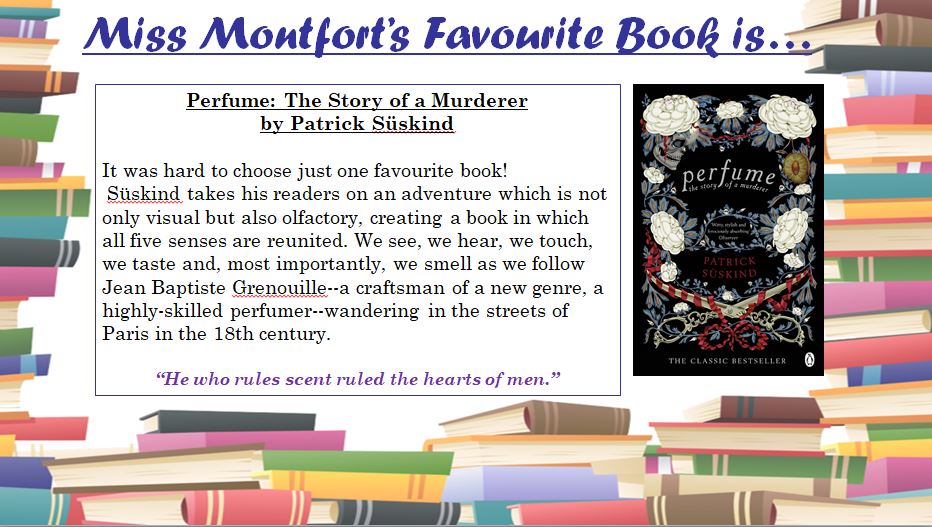
Favourite Book Friday!
MFL teacher, Ms Montfort’s book choice claims to keep us intrigued by using all 5 of our senses! Let’s read on…
Perfume: The Story of a Murderer by Patrick Süskind
“It was hard to choose just one favourite book! Süskind takes his readers on an adventure which is not only visual but also olfactory, creating a book in which all five senses are reunited. We see, we hear, we touch, we taste and, most importantly, we smell as we follow Jean Baptiste Grenouille – a craftsman of a new genre, a highly-skilled perfumer–wandering in the streets of Paris in the 18th century. ” “He who rules scent ruled the hearts of men.”
#EGSliteracydept #lovebooks #keepreading #bookclubs #englishliterature #FavouriteBookFriday
International Nurses Day is celebrated each year on 12 May, on the birthday of Florence Nightingale, the founder of modern nursing. It’s a day of celebration and acknowledgement of the compassion, professionalism, bravery and round-the-clock commitment of nurses caring for patients around the world.
Here at EGS we will be reading an extract from “Looking at the Stars” by Lewis Hine.
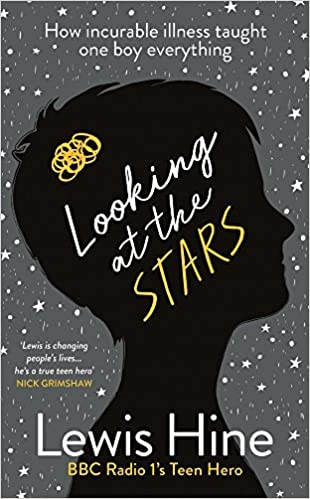
Lewis Hine is a British teen who was diagnosed with water on the brain and a life threatening brain tumour at the age of 17 months.
Lewis initially shared his experience with millions online before deciding to write it into a memoir.
He now spearheads the “A World With Friends” charity, which ensures no child faces illnesses alone. He constantly praises and honours the doctors, consultants, nurses and paramedics who supported him.

More about International Nurses Day:
The ICN has set the theme this year as ‘nursing the world back to health’, with a focus on the ‘true value of nurses to the people of the world’.
Annette Kennedy, the ICN President, has said that, ‘This global COVID-19 pandemic has shown the world the important role that nurses play in keeping people healthy across the lifespan’ and so the day will be focused on the future of healthcare.
Each year, the International Council of Nurses prepares and distributes the International Nurses’ Day kit, containing valuable educational and public information materials that can be used by nurses around the world.
However, countries around the world celebrate this occasion in their own ways. For example, in the UK, there is a service held each year in Westminster Abbey in London where a symbolic lamp is passed between nurses until it reaches the Nurses’ Chapel in the Abbey where it is then placed on the High Altar. This symbolises the passing of knowledge from one nurse to another.
