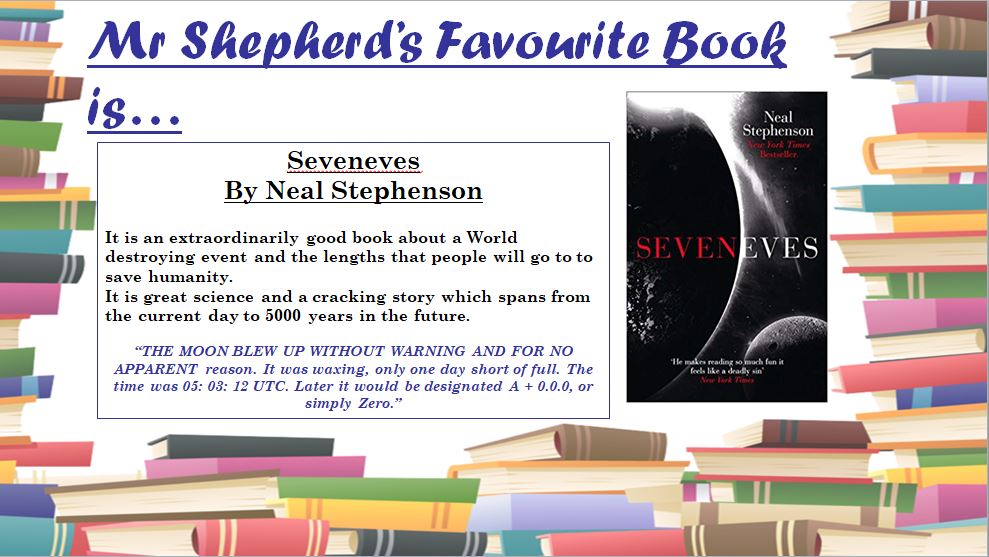
“THE MOON BLEW UP WITHOUT WARNING AND FOR NO APPARENT reason. It was waxing, only one day short of full. The time was 05: 03: 12 UTC. Later it would be designated A + 0.0.0, or simply Zero.”
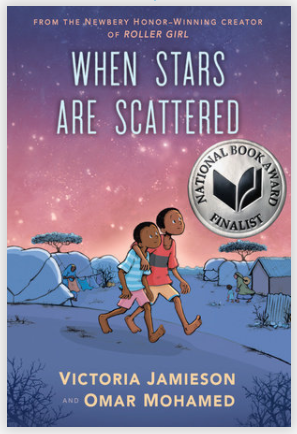
Omar’s website: https://www.refugeestrong.org/
About Amnesty International
Amnesty International UK work to protect people wherever justice, freedom, truth and dignity are denied.
As a global movement of over ten million people, Amnesty International is the world’s largest grassroots human rights organisation.
They investigate and expose abuses, educate and mobilise the public, and help transform societies to create a safer, more just world. They have received the Nobel Peace Prize for their life-saving work.
Amnesty International was first established in the month of July 1961 in London. Peter Benenson, an English labour lawyer was inspired to establish this organization after learning of two Portuguese students being imprisoned for seven years after “having drunk a toast to liberty.” Together with Eric Baker of the Religious Society of Friends, and numerous other intelligentsia, including academics, writers, and lawyers, they composed an article called “The Forgotten Prisoners” that would see publication in The Observer in May of 1961. This led to an appeal which quickly grew into an organization that would work to change the world and see that everyone would be entitled to a set of basic human rights.
To see their campaigns & Issues: https://www.amnesty.org.uk/issues
Twitter: @AmenstyUK
Instagram: amnestyuk
Facebook: @AmenstyUK
#HumanRights
https://www.amnesty.org.uk/education/human-rights-young-people-schools
The Hay Festival kicks off today Wednesday 26th May and runs through to Sunday 6th June with a full digital programme. Hay Festival 2021,
The 2021 programme for schools has been created especially for digital audiences with a vibrant blend of events such as, creative writing workshops, inspiring authors filmed on location, and entertaining, thought-provoking performances.
www.hayfestival.com/programme-for-schools
There will be events for pupils in Key Stages 1, 2, 3 & 4 every day and you can buy books before, during or after the events from their online shop.
These events will be introduced by Radzi Chinyanganya and Anni Llyn and will be available to watch again FREE on Hay Player. All events are approximately 30 minutes in duration.
There are also things going on during May break (week off 31st May – 4th June); www.hayfestival.com/m-163-hay-festival-2021
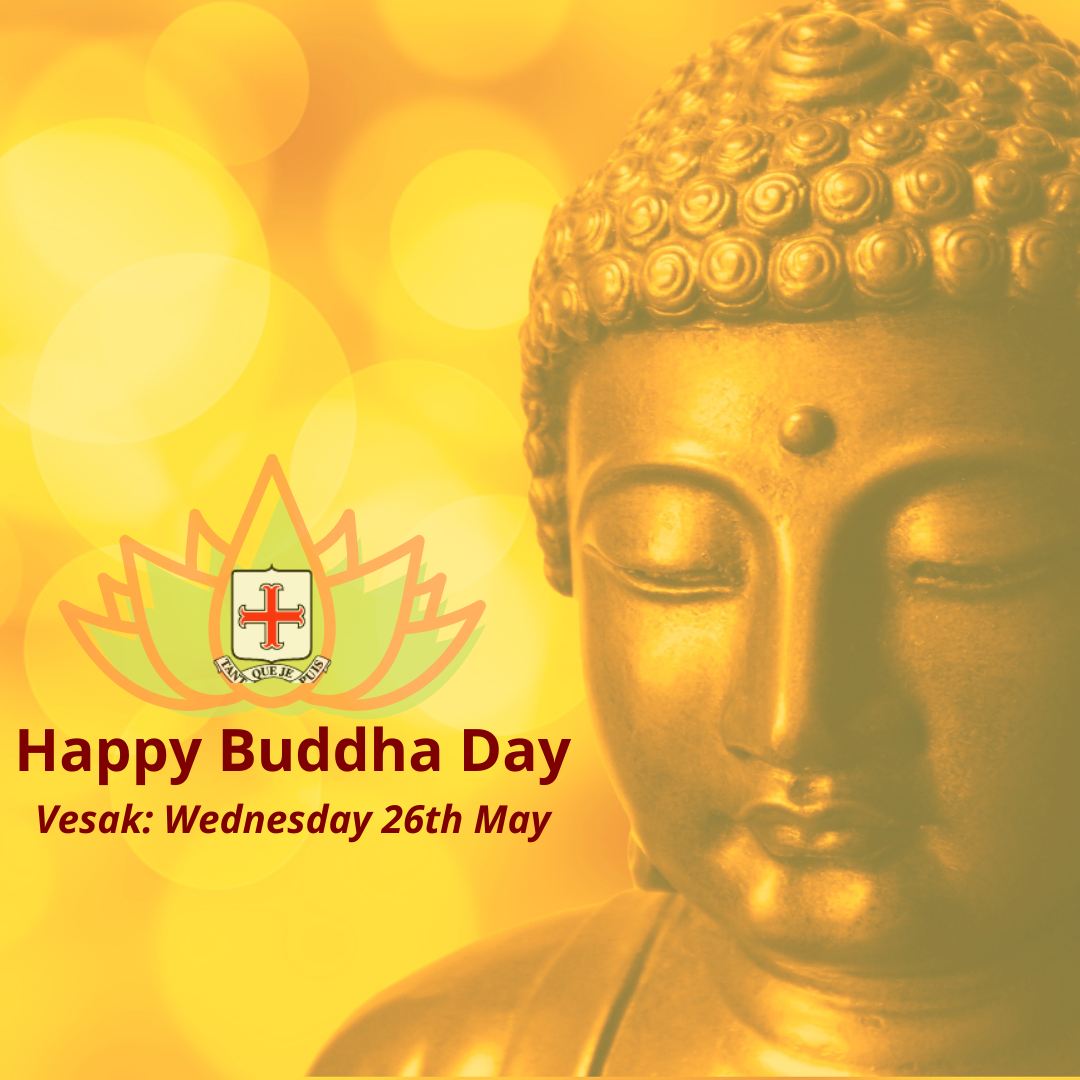
Vesak is one of the most important Buddhist festivals. It is also known as Wesak or Buddha Day.
Vesak is celebrated once a year. The date of Vesak changes each year as it take places at the time of the first full moon of the ancient lunar month of Vesakha, which usually falls in May or early June.
It is a celebration of Buddha’s birthday and, for some Buddhists, marks his enlightenment (when he discovered life’s meaning). Each Buddhist culture has its own traditions for the day, but it is celebrated in lots of different countries, including many across Asia such as: India, Thailand, and North and South Korea.
Many Buddhists will go to their local temple and some might even stay there throughout the day and night of the full moon.
Many will do good deeds, take part in chanting and meditation, reflect on Buddhist teachings, bring offerings to the temple and share food with people. Families may decorate their homes with lanterns, take part in processions and wear special white clothes to mark the occasion. Friends and family may also send cards to each other.
A ceremony called Bathing the Buddha may also be held, when water is poured over the shoulders of the Buddha to remind people to clear their minds of negative thoughts like greed and hatred.
It is also a time to reflect on his teachings and what it means to be Buddhist.
Buddhists do not believe in a single god who created the world and everything in it. In fact, most Buddhists believe in the teachings of a man called Siddhartha Gautama – also known as the Buddha. Siddhartha is believed to have been a prince who was born into a wealthy family in what is now called Nepal in the 5th Century BC.
It’s believed that Siddhartha Gautama realised that wealth and luxury did not guarantee happiness. So he travelled as a homeless holy man to learn more about the world and saw the suffering in the world. It’s believed that after six years of studying and meditation on his travels, he became spiritually aware and reached his goal of finding meaning in life. This is called enlightenment.
At this time, he became the Buddha and for the rest of his life he taught his followers of his experiences.
Buddha is a title, rather than a name, which means the enlightened or awakened one.
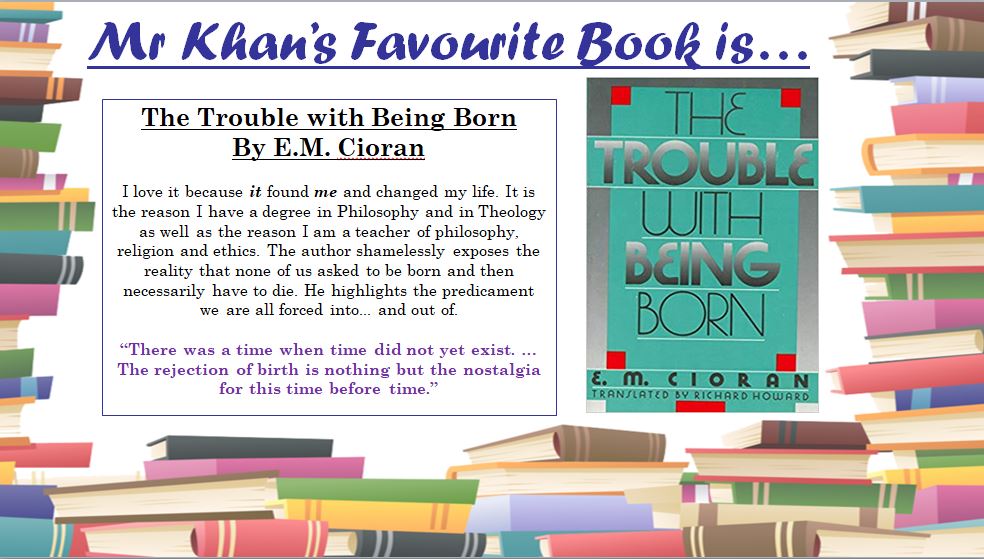
Teacher of RE, Mr Khan’s choice is, of course, one to get your minds thinking. The book grapples with the major questions of human existence: birth, death, God, time, relating to others and how to make ourselves get out of bed in the morning!
The Trouble with Being Born By E.M. Cioran
“I love it because it found me and changed my life. It is the reason I have a degree in Philosophy and in Theology as well as the reason I am a teacher of philosophy, religion and ethics. The author shamelessly exposes the reality that none of us asked to be born and then necessarily have to die. He highlights the predicament we are all forced into… and out of.” “There was a time when time did not yet exist. … The rejection of birth is nothing but the nostalgia for this time before time.”
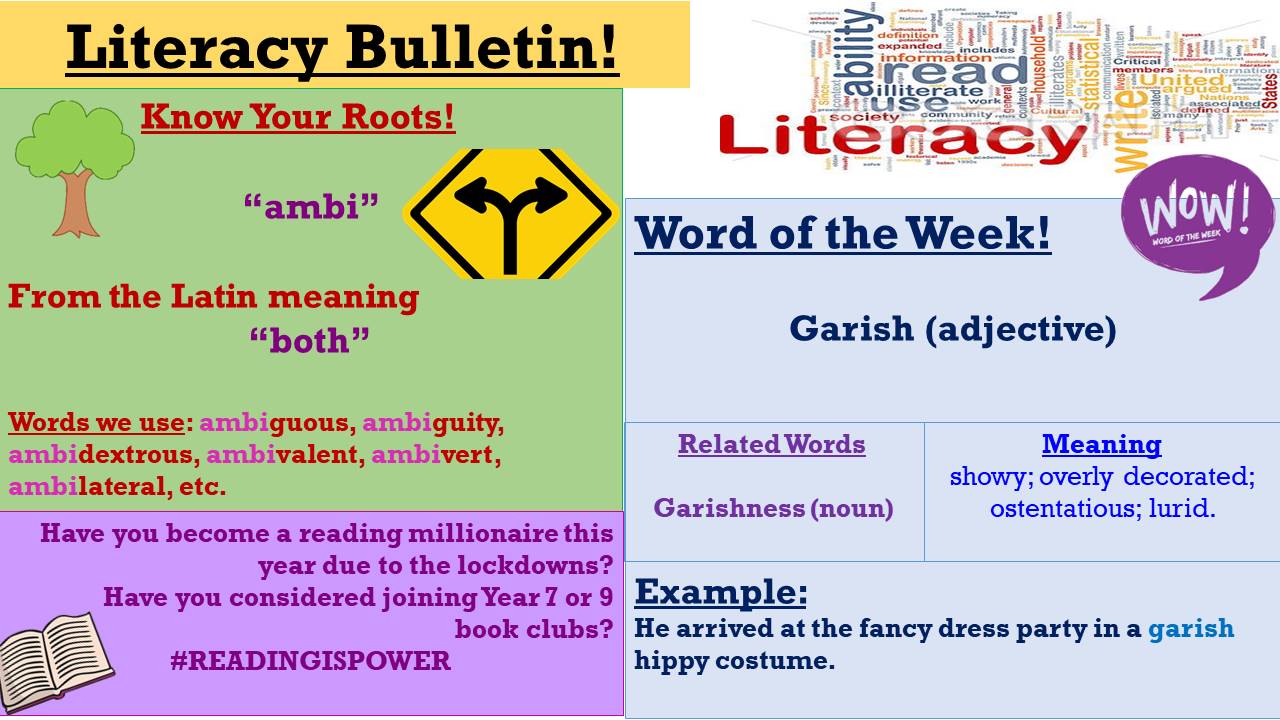
www.enfieldgrammar.org/learning-support/literacy/
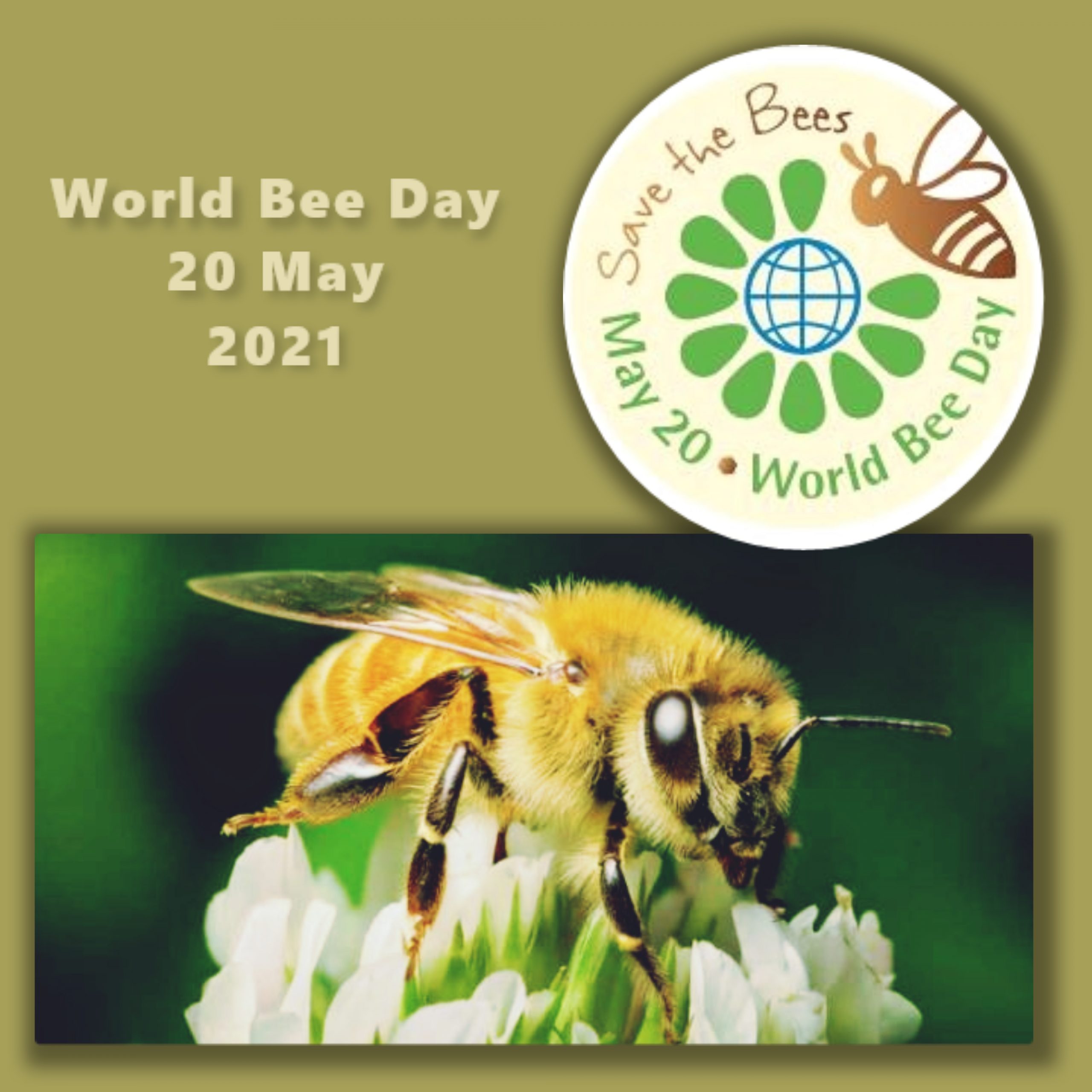
There is always a lot of buzz about this awareness day!
- Did you know? Bees can see a colour imperceptible to humans and known as “bee’s purple”. It is a combination of yellow and UV light.
- Did you know? The average honey bee will make a twelfth of a teaspoon of honey in its lifetime.
- Did you know? Bees are actually a democracy. They have debates when choosing a new home and each scout is given an equal platform. The votes end with a unanimous decision as each bee in the colony does its own research to verify the scout claims. The Queen remains impartial throughout the process.
How you can help:
- Plant bee-friendly shrubs or flowers in your garden
- Make some homes for bumble bees and solitary bees.
- Talk to at least 10 people about bees during the day – raising awareness of the importance of bees
- Dress up as a bee/wear clothes with bee motifs.
- Support a beekeeping / environmental charity.
- Buy honey and other hive products
https://www.worldbeeday.org/en/
#SaveTheBees #WorldBeeDay