May Day has been celebrated across the world for over 2000 years and in the UK, the first of the two bank holidays that fall in the month is in celebration of the occasion.
May Day is a public holiday that traditionally marks the arrival of spring and falls on the first Monday in May.
An ancient festival, May Day was originally a celebration of the changing of the seasons in the northern hemisphere and was associated with light, flowers and fertility.
Roman times – they would commemorate the day with the Floralia – or Festival of Flora – Flora is the goddess of fruit and flowers. This took place in late April/early May during that period of history.
Roman Catholics began observing May Day a little more recently in the 18th Century. Devotions were made to the Virgin Mary – often in the form of floral crowns – May 1 is also a feast day for Mary’s husband St Joseph The Worker.
Some English traditions associated with May Day include:
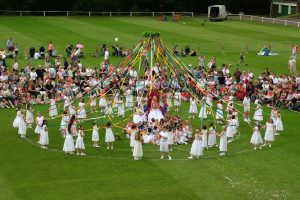
- crowning a May Queen – the personification of spring or summer, she is usually crowned with flowers
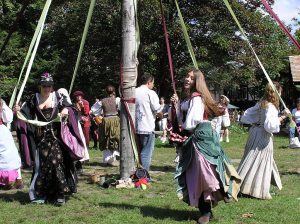
- dancing round the Maypole – symbolising a tree, the Maypole is decorated with flowers and ribbons and danced round in the hope of a good harvest
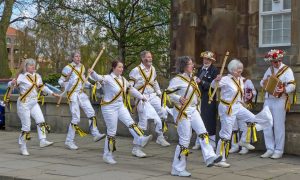
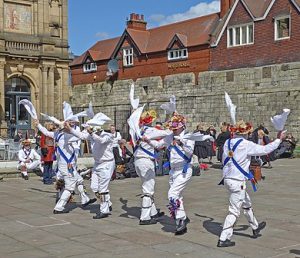
- Morris dancing
Maypoles are thought to have first appeared in Germany and the surrounding areas. Where this particular tradition comes from is unclear, but one theory is that making maypoles began as pagan tradition of cutting down young trees and putting them in the ground to mark the coming of summer.
May Day is also known as International Workers Day
During the Industrial Revolution of the 19th century, many workers in America were dying from poor working conditions. This led to many labour strikes and civil unrest until an agreement was signed that limited the working day to 8 hours.
The May Day bank holiday is now a public holiday in many countries to celebrate all kinds of labourers and workers.
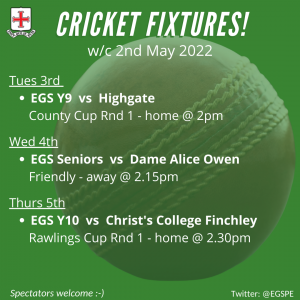
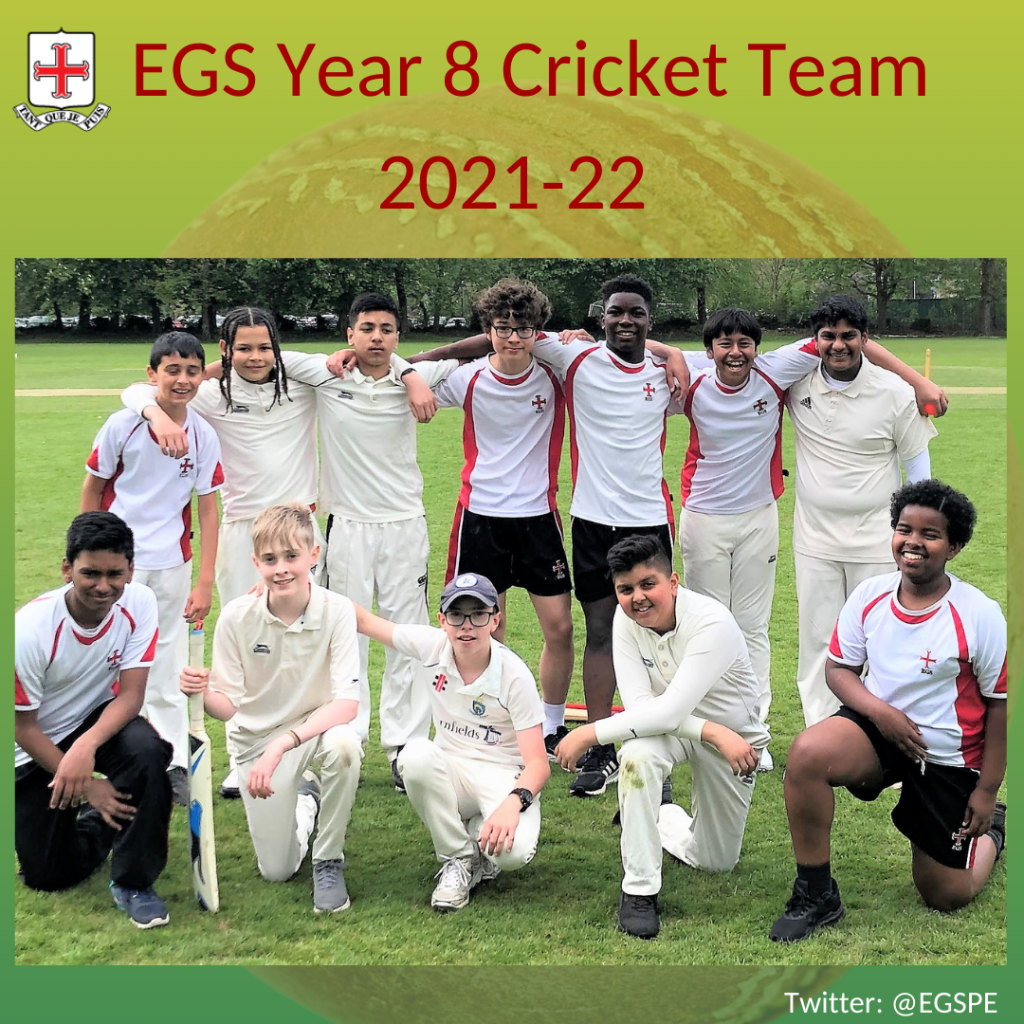
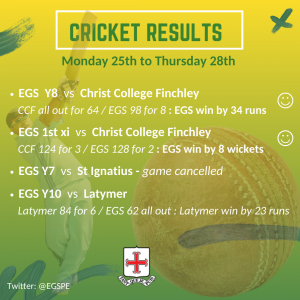
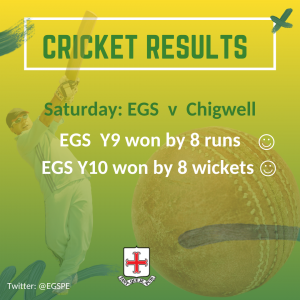
Well done EGS Cricket boys!
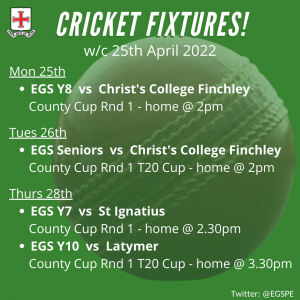
Playing their first match of the season at home against Christ College Finchley this week in Round 1 of the County Cup, gave Y8 their first win by 34 runs and moves them up to the next round of the Middlesex cup. It was a competitive game played in great spirit.
This was followed by EGS Seniors (1st xi) also winning their first game of the season against Christ College Finchley by 8 wickets.
EGS Y8 vs Christ College Finchley : CCF all out for 64 / EGS 98 for 8 : EGS win by 34 runs
EGS 1st xi (Seniors) vs Christ College Finchley: CCF 124 for 3 / EGS 128 for 2 : EGS win by 8 wickets
EGS Y10 vs Latymer: Latymer 84 for 6 / EGS 62 all out : Latymer win by 23 runs
Congratulations to Jay, who recently went on tour with West Ham and was awarded ‘best defender of the tournament’ – great achievement!




Elevate Education are inviting all our parents/carers of Years 10 through to 13 to an online webinar on: “How to Help Your Child’s Memory”
Elevate Education is a company we as a school have used for a number of years to help run our Year 11 GCSE exam preparation seminars and they have been extremely successful and popular with both our staff and pupils.
In this webinar, Elevate will go through the following:
• How they can set up their child’s study space to maximise attention;
• The best techniques for improving memory;
• The 7 most common mistakes which actually reduce memory retention.
Webinar details
Date: Tuesday 3 May 2022
Topic: How to Help Your Child’s Memory
Time: 6pm-7pm
Registration link: https://go.elevateeducation.
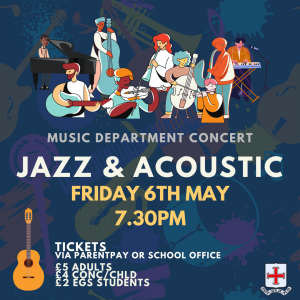
Many of our school bands will be performing in this event including ensembles, soloists and the choir.
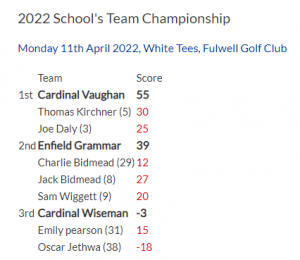
On a beautiful day at Fulwell Golf Club, Middlesex schools competed to earn the right to represent the County at the Regional and National Schools Championships. Despite the mild weather, there was a consistent breeze to offer the players a good challenge.
EGS had 3 boys in the tournament who all performed brilliantly and came Team Runners-Up;
– Sam Wiggett
– Charlie Bidmead was joint Runner-Up in the U16s
– Jack Bidmead was 3rd in the scratch and is one of 4 boys going on the represent Middlesex in the Regional Finals.
Well done boys! Very proud of them all 🙂 ⛳🏌️♀️
#schoolgolf #schooltournament #middlesexgolf #schoolsports

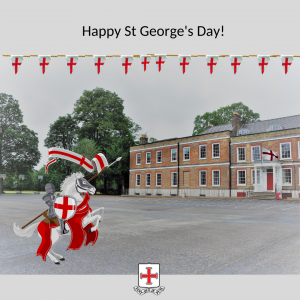
St George:
- Wasn’t English!
- Never visited England!
- Wasn’t a Knight!
But St George was a Martyr
St George’s Day is also celebrated in Venice, Genoa, Portugal, Ethiopia and Catalonia…
And the dragon? The story goes that St George rode into Silene (modern day Libya) to free the city from a dragon who had a taste for humans, but it’s a story….
Find out more: www.english-heritage.org.uk/9-things-you-didnt-know-about-st-george/
Visit the following website for some interesting information and craft activities..
www.english-heritage.org.uk/st-georges-day