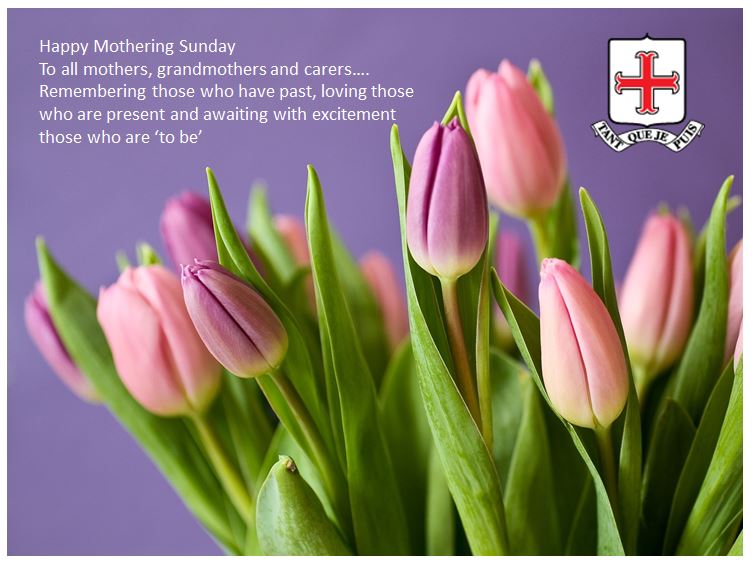
During the Middle Ages, the custom developed of allowing people who had moved away from where they grew up to come back to visit their home or ‘mother’ churches, and their mothers, on the fourth Sunday of the Christian festival of Lent.
At the time, it wasn’t uncommon for children to leave home to work when they were as young as 10 years old, so this was an opportunity for families to meet up again.
This became Mothering Sunday in Britain. As the dates of Lent vary each year, so does the date of Mothering Sunday.
Although it’s often called Mother’s Day in the UK, it has no connection with the American Mother’s Day.
In the US, Mother’s Day is celebrated on the second Sunday of May each year.
The idea started in America when a woman called Anna Jarvis held a small memorial service for her own mother on 12 May 1907.
Soon after, most places in America were observing the day and in 1914, the US president made it a national holiday, celebrated on the second Sunday of May.
Lots of other countries celebrate Mother’s Day at different times of the year as well.
The food item traditionally associated with Mothering Sunday is Simnel cake – a type of fruit cake with two layers of almond paste (one on the top and one in the middle).
These days, Simnel cakes are more usually linked with Easter.
Traditionally churches hold Mothering Sunday services and flowers are given out to children to give to their mums.
www.bbc.co.uk/newsround/Mothers day